Insights
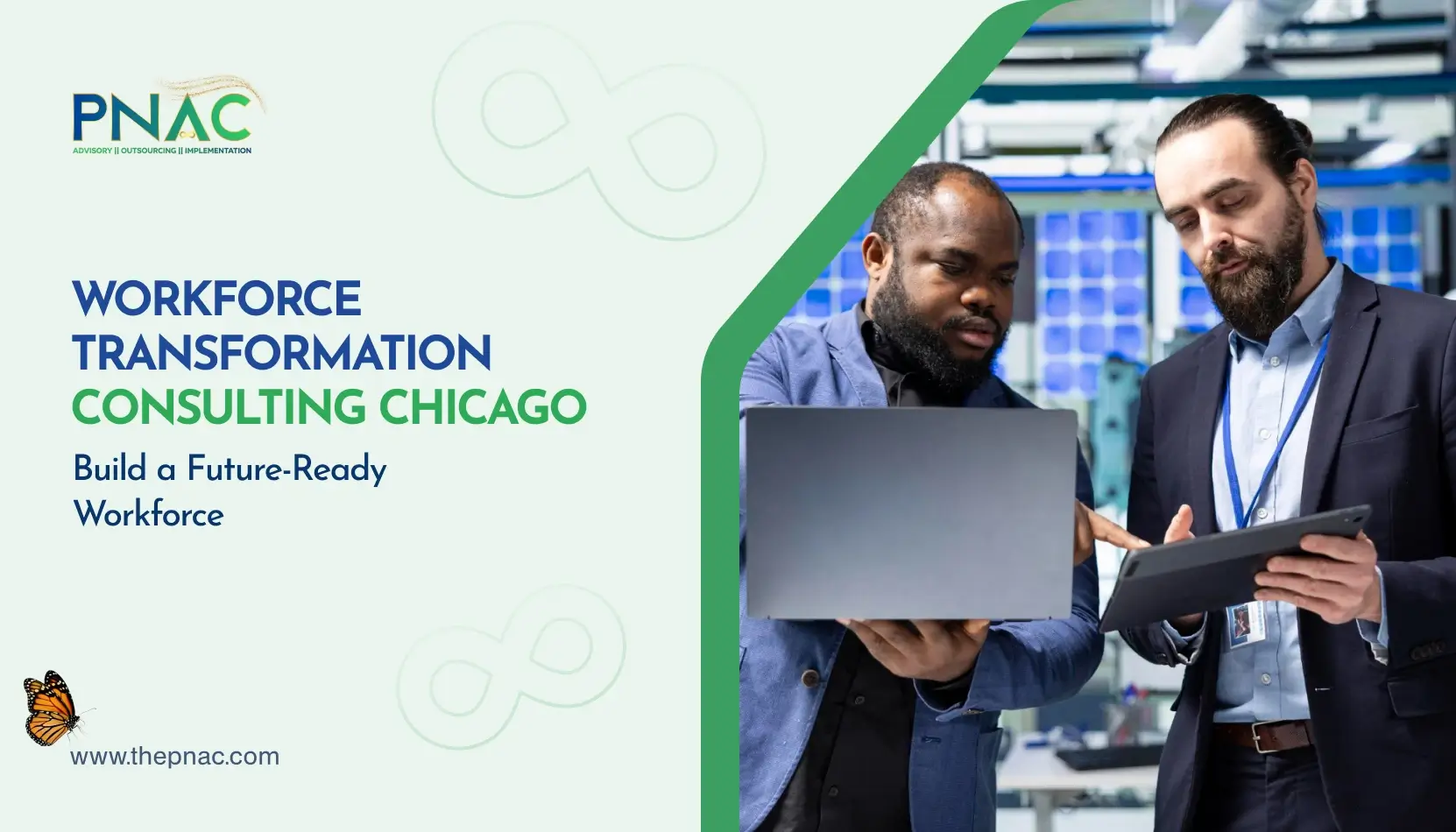
Workforce Transformation Consulting Chicago: Build a Future-Ready Workforce
Your business may be ready for the next stage of growth. But is your workforce ready for it? That is where many organizations get stuck.
PNAC Editorial | 23th September 2026 | 10 min read | Last Reviewed: September 2026
You can introduce new technology, restructure teams, expand into new markets, or invest in AI. But if your people, skills, leadership, and processes are not ready to support those changes, the transformation can quickly become expensive, frustrating, and difficult to sustain.
For businesses in Chicago, workforce transformation is no longer just an HR initiative. It is becoming a business priority.
And the real question isn't whether your workforce needs to change. It's whether you're preparing for that change before it becomes a problem.
Need clarity on where your workforce stands today?
Talk to our Workforce Transformation Consultant →
What Does Workforce Transformation Actually Mean?
Workforce transformation sounds complicated.
In reality, it comes down to one important question:
Does your organization have the people, capabilities, structure, and leadership it needs for where the business is going?
Workforce transformation consulting helps answer that question.
It looks at more than hiring and employee management. It considers your workforce strategy, organizational structure, skills, leadership, technology, culture, and ability to adapt.
For example, perhaps your company is introducing AI but doesn't know how employee roles will change.
Or you're growing quickly, but your current organizational structure is creating confusion.
Maybe your employees are struggling to adapt to a major change.
Or leadership knows something needs to change-but nobody has a clear roadmap.
These are workforce transformation challenges.
The good news? You don't need to solve them alone.
Have a workforce challenge you're trying to figure out?
Speak with PNAC's HR Advisory Team →
Why Chicago Businesses Are Rethinking Their Workforce
The workplace has changed dramatically.
Technology is changing how jobs are performed. AI is creating new opportunities while changing existing roles. Employees expect greater flexibility and development opportunities. Businesses are also under pressure to operate efficiently while continuing to grow.
That creates a difficult balancing act for leadership.
You need to move the business forward without leaving your workforce behind.
A strong workforce transformation strategy helps connect those two sides.
Instead of asking:
"How do we get employees to adapt?"
the conversation becomes:
"What does our future organization need, and how do we prepare our people for it?"
That shift can change how organizations approach workforce planning, leadership, employee development, restructuring, and change management.
Planning a major organizational or technology change?
Discuss Your Transformation Plans with PNAC →
5 Signs Your Workforce May Not Be Ready for the Future
Sometimes the need for transformation isn't obvious.
There may not be one major problem. Instead, you notice several smaller warning signs.
1. Your Business Strategy Has Changed-But Your Workforce Hasn't
Your business may have new growth targets, new technology, new markets, or a completely different operating model.
But your roles, skills, and workforce structure may still be built around yesterday's strategy.
That's a gap worth addressing.
2. Employees Are Resisting Change
Resistance isn't always about employees being unwilling to change.
Sometimes people simply don't understand why the change is happening, what it means for them, or how they are expected to work differently.
Effective change management addresses those issues before they become major barriers to transformation.
Seeing resistance or low adoption during a transformation?
Explore PNAC's Change Management Support →
3. You Have Skills Gaps You Can't Ignore
Technology changes quickly.
Your workforce needs to change with it.
If critical skills are missing, organizations may struggle to execute their strategy-even when they have the right technology and resources.
Workforce transformation can help identify current capabilities, future requirements, and the gaps between them.
4. Your Organization Is Growing or Restructuring
Growth can expose problems that weren't visible before.
Reporting structures become complicated. Responsibilities overlap. Teams aren't sure who owns what. Leaders spend more time solving internal issues instead of focusing on growth.
Organizational redesign can help create greater clarity and alignment.
Going through restructuring or rapid growth?
Talk to PNAC About Organizational Transformation →
5. HR Is Constantly Putting Out Fires
If your HR team spends most of its time reacting to problems, there may be little room for strategic workforce planning.
That is where external HR advisory support can make a difference.
The goal isn't simply to give HR more work.
It's to help leadership make better workforce decisions with greater clarity.
What Can Workforce Transformation Consulting Help With?
Every organization is different, so transformation shouldn't begin with a generic checklist.
It should begin with your business challenge.
Depending on your needs, workforce transformation consulting may include:
- Workforce planning
- Skills and capability assessments
- Organizational design
- Leadership alignment
- Change management
- Employee engagement
- Talent strategy
- Reskilling and upskilling
- AI and digital workforce transformation
- Performance improvement
- Organizational development
The important part is how these pieces work together.
A workforce strategy that ignores organizational structure may not solve the problem.
Technology implementation without change management can struggle with adoption.
Hiring more people won't necessarily fix a capability problem.
The right strategy connects the pieces.
Not sure which workforce challenge you should address first?
Get a Workforce Assessment From PNAC →
How PNAC Approaches Workforce Transformation
At PNAC, workforce transformation isn't treated as a one-size-fits-all HR exercise.
The focus is on understanding where your organization is today, where it needs to go, and what needs to change to get there.
That can start with understanding your workforce and business objectives.
From there, organizations can identify capability gaps, organizational challenges, leadership requirements, and change-readiness issues.
The next step is creating a practical roadmap.
Not a document that sits in a folder.
A roadmap that helps leadership understand what needs to happen, who needs to be involved, and how the transformation can move from strategy to execution.
PNAC combines HR advisory, workforce strategy, organizational transformation, change management, and technology-focused approaches to help organizations navigate that journey.
Want to see what this could look like for your organization?
Schedule a Free Advisory Conversation with PNAC →
Workforce Transformation Isn't Just About Employees
This is an important distinction.
Workforce transformation ultimately affects the entire business.
When the right people have the right capabilities, leadership has greater clarity, teams understand their responsibilities, and employees are better prepared for change, the organization is better positioned to execute its strategy.
That's why workforce transformation belongs in the leadership conversation-not only the HR conversation.
The question isn't:
"How can we change our workforce?"
It is:
"What workforce do we need to achieve our business goals?"
Once you answer that, the transformation strategy becomes much clearer.
Why Bring in a Workforce Transformation Consultant?
You don't necessarily need another consultant to give you a 100-page report.
You need someone who can look at the bigger picture and help connect people, strategy, structure, leadership, technology, and change.
An experienced workforce transformation consultant can provide an outside perspective, identify gaps that may be difficult to see internally, and help leadership turn workforce challenges into an actionable plan.
For Chicago organizations navigating growth, restructuring, digital transformation, AI adoption, or changing workforce expectations, that outside perspective can be particularly valuable.
Have a transformation initiative coming up? Don't wait until implementation exposes workforce problems.
Talk to PNAC Before You Start →
Is Your Workforce Ready for What's Next?
Maybe you're already seeing the warning signs.
Maybe your organization is growing faster than your workforce strategy.
Maybe you're introducing AI.
Maybe you're restructuring.
Or maybe you simply know that the way your organization works today won't be enough for where you want to go tomorrow.
You don't need to have all the answers before starting the conversation.
Start with the challenge.
PNAC can help you understand where your workforce stands, identify the gaps, and determine what should happen next.
Let's Talk About Your Workforce Transformation
If you're looking for workforce transformation consulting in Chicago, start with a conversation-not a commitment.
Tell PNAC what's changing in your organization, what's creating friction, and where you want to go.
We'll help you explore the next step.
Book Your Free Advisory Call →
Your future workforce doesn't have to be figured out today. But it should be planned for.
Frequently Asked Questions (FAQs)
Workforce transformation consulting helps Indian organizations align their workforce strategy, skills, organizational structure, leadership, processes, and technology with future business goals.
Companies benefit most when scaling operations, restructuring, adopting AI or new HR technology, closing skills gaps, shifting operating models, or experiencing challenges with employee retention and adoption.
While traditional HR advisory focuses on routine HR functions and compliance, workforce transformation takes a holistic approach—connecting overall business strategy with organizational design, digital transformation, and culture change.
Yes. AI changes job roles, workflows, skill requirements, and team structures. Workforce transformation helps organizations assess these impacts, reskill employees, and guide leadership through the transition seamlessly.
No. Startups, SMEs, high-growth mid-market companies, and large enterprises undergoing organizational changes can all leverage transformation strategies to build scalable, future-ready teams.
PNAC provides end-to-end support across workforce strategy, HR policy design, talent development, HRIS & process automation, statutory compliance, POSH framework, payroll management, and change leadership.